






24/7, every day · Dubai+971 50 623 0452
SAYARAAuto Services

What happens when you call

We test first. The reading decides.

Three steps. A van reaches your car, battery on board.

  1. Step 1

    Call or WhatsApp

    Tell us the car and where it is. No forms, no hold music — 24/7, every day.

  2. Step 2

    We pick the right battery

    Make, model and year give us the exact size, terminal layout and cranking amps, and it goes on the van.

  3. Step 3

    A van reaches you in ~25 min

    Roadside, villa driveway or basement parking — we bring the tools and the stock to you.

Roughly one car in three we test in Dubai keeps its battery.

OUR SERVICES

Complete Car Care, Wherever You Are

Four ways to reach us, from a battery fitted in your driveway to a flatbed at the roadside. Same team, same number, 24/7, every day.

Car Recovery & Towing

Car Recovery & Towing

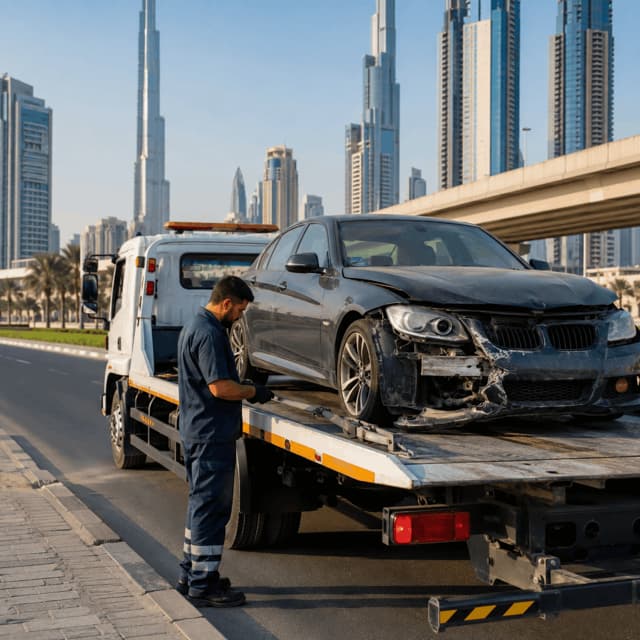
Accident or breakdown? Our flatbed recovery trucks reach you anywhere in Dubai and move your car safely — to our service center, your garage, or any location you choose.

  • Flatbed trucks for safe, damage-free transport
  • Available 24/7, every day across Dubai
  • Accident, breakdown and non-start recovery
  • Drop-off at our center or any location you choose

Battery & starting

Dead battery, alternator or starter?

Three faults, one symptom: the car will not start. Telling them apart before anyone sells you a part is the whole job.

The three suspects

  • Battery
  • Starter
  • Alternator

How urgent

  • Stop driving
  • Days, not weeks
  • Keep an eye on it
  1. 01

    Slow, laboured cranking, then it starts

    Battery near end of life. Capacity has dropped below what the starter wants but not below what it needs.

    BatteryDays, not weeks
  2. 02

    One loud click, dashboard lights stay bright

    Power is reaching the starter solenoid but the motor is not turning. The battery is fine.

    StarterStop driving
  3. 03

    Rapid clicking, lights dim as you turn the key

    Not enough current to hold the solenoid in. Flat battery, or a corroded terminal starving it.

    Battery or terminalsStop driving
  4. 04

    Started fine, then died while driving

    The battery started it and the alternator never took over. The car ran on stored charge until there was none.

    AlternatorStop driving
  5. 05

    Jump starts fine, dead again next morning

    Either the battery no longer holds charge, or something is drawing current with the ignition off — a parasitic drain.

    Battery or parasitic drainDays, not weeks
  6. 06

    Battery light on, everything still works

    The charging system has stopped charging. You have roughly 30-60 minutes of driving before the car stops.

    AlternatorStop driving
Driver checking roadside-assistance cover on a phone inside a parked car
01

First, the honest bit: you may already have free cover

Before you pay anyone, check these — if one covers you and you’re not in a hurry, use it:

  • Dubai RTA roadside patrol can assist on main roads
  • Several UAE bank cards include free roadside assistance (check yours)
  • Most comprehensive insurance policies include a battery boost

Roadside technician helping a driver at night in Dubai
02

Why drivers call us anyway

Free cover is great when you have time to wait for a contractor. When you’re stranded in a car park at midnight, this is the difference:

  • We typically arrive faster than an insurer's contractor
  • We test your battery and alternator — not just boost and leave

  • If it's finished, we replace it on the spot, with warranty
  • Basement, mall and airport parking — we come to you

Battery technology

AGM, EFB or standard — and what the numbers on the label mean

Fitting the wrong technology to a start-stop car is the most common expensive mistake in this market. Fitting the wrong numbers is the second.

TypeBest forCharge cyclesCost


Standard (flooded)Perfectly adequate where the engine runs continuously. Not designed for the repeated deep discharge a start-stop system asks for.Cars with no start-stop system~30,000Lowest
EFBAn enhanced flooded battery: roughly twice the cycle life of standard, and the minimum a start-stop car should be fitted with.Entry-level start-stop cars~85,000Mid
AGMAbsorbent glass mat: sealed, spill-proof, far more vibration and heat tolerant. If the car came with AGM, it must be replaced with AGM.Start-stop with regenerative braking, heavy electronics~180,000Highest

The four figures on every battery label

CCACold Cranking Amps
How much current the battery can deliver for 30 seconds at -18°C. Irrelevant as a temperature in Dubai, but it is the industry's comparison number for raw starting power — fit at or above the figure the manufacturer specified, never below.
AhAmp Hours
Capacity — how long the battery can supply current before it is empty. This is what runs your alarm, telematics and memory seats while the car is parked. Undersize it and the car goes flat over a long weekend at the airport.
RCReserve Capacity
Minutes the battery can run the car's essential electrics alone if the alternator fails. It is the number that decides whether an alternator failure ends at the roadside or at a workshop.
Group sizePhysical fit
Case dimensions, terminal position and hold-down type. A battery with the right electrical figures and the wrong group size either will not clamp down or puts its positive terminal against the bonnet.

Engine & mechanical

Engine warning signs you should not ignore

Six complaints we hear every week, what each one usually turns out to be, and how urgent it really is.

Illuminated warning lights on a car dashboard
Why is my check engine light on?

Most often an oxygen sensor, an evaporative-emissions leak (a loose fuel cap counts), a misfire or a catalytic converter reading out of range. A steady light means read it soon. A flashing light means stop driving now — a live misfire is dumping raw fuel into the catalytic converter and destroying it by the minute.

Why is my car losing power?

In order of likelihood: a clogged air or fuel filter, a dirty mass airflow sensor, a failing ignition coil, or a blocked catalytic converter. All four are cheap to rule out and all four get misdiagnosed as engine wear.

Why is my car shaking or vibrating?

Shaking at idle that smooths out when moving is usually a misfire or a collapsed engine mount. Vibration that appears at a specific speed and goes away above it is wheel balance. Vibration felt through the brake pedal only is disc thickness variation. Three different repairs, and the speed at which it happens tells you which.

What do the noises mean?

A rhythmic tick that rises with revs is usually valvetrain or an exhaust manifold leak. A deep knock under load is bottom-end and is serious. A squeal on start-up is a drive belt. A rumble that changes with steering is a wheel bearing, not the engine at all.

Why is my car burning oil?

Blue smoke on start-up points at valve stem seals. Blue smoke under acceleration points at piston rings. Oil disappearing with no smoke at all means it is leaking, most commonly from a cam cover gasket or a rear main seal. Dubai heat hardens all three seals faster than a cooler climate does.

Should I worry about a rough idle?

Yes, because it is cheap now and expensive later. A rough idle is almost always a vacuum leak, a dirty throttle body, a failing coil or a clogged injector. Left alone, the unburnt fuel a misfire produces washes the oil film off the cylinder walls and wears the bore.

Battery brands

The batteries we fit, and what each one is good at

Every brand here is stocked, fitted and warrantied by us.

Routine maintenance

What a car service actually includes

Four tiers of work, what each one actually covers, and the honest version of what happens when one gets skipped.

  1. The regular one

    The visit you make most often

    • Engine oil and oil filter
    • Air filter
    • Tyres rotated, pressures set
    • Brakes and fluid levels looked over
  2. The bigger one

    Comes round every few regular services

    • Everything in the regular service
    • The ignition side of the engine
    • The filters an oil change never touches
    • Brake fluid renewed, not just checked
  3. Fluids, and what carries them

    Long-life fluids are long-life, not lifetime

    • Transmission fluid and its filter
    • Coolant, before it turns acidic
    • Suspension joints and bushes
    • Battery and charging system tested
  4. Once or twice in a car's life

    Cheap on schedule. Ruinous off it

    • Timing belt and water pump, on belt-driven engines
    • The ignition system as a set, not one part
    • Alternator and starter assessed properly
    • Mounts and drive belts that have quietly aged

What it costs later

Skip it and Oil change
Sludge in the oil galleries, accelerated cam and bearing wear. Silent for a long time, then terminal.
Skip it and Brake fluid
Absorbed water lowers the boiling point. The pedal goes long exactly when you brake hardest.
Skip it and Transmission fluid
Cooked fluid stops holding line pressure, the clutch packs slip, and a service becomes a rebuild.
Skip it and Timing belt
On an interference engine, a snapped belt puts the valves through the pistons. It is the most expensive omission on the list.

Prices are quoted before we start and include VAT. No call-out fee, no diagnostic charge on top of an accepted repair.

Fitment index

Find your car

Pick your make for the batteries that fit it, the prices we charge, and the model-by-model detail.

All car brands
Close view of car tyre tread and sidewall

Brakes, tyres & suspension

The three systems that keep the car on the road

Your tyres tell you about your alignment. Your pedal tells you about your discs. Learn to read both.

  • Wear on the inner edge onlyExcess negative camber or too much toe-inFour-wheel alignment
  • Both outer edges worn, centre fineChronic under-inflationSet pressures cold, monthly
  • Feathered, saw-tooth edge you can feelToe misalignment scrubbing the tread sidewaysAlignment, then watch it
  • Steering wheel vibrates at 90-110 km/hWheel balance, or a buckled rimBalance all four, inspect rims
  • Pulling to one side on a flat roadAlignment, uneven pressures, or a sticking caliperCheck pressures first, then align
  • Car keeps bouncing after a dipShock absorbers have lost their dampingReplace shocks in axle pairs

We Cover All of Dubai

At home, at work, in a parking garage, or on the road — send your location and we'll confirm we're there.

AC & cooling

Why Dubai summer is hard on cooling systems

The AC and the engine cooling system fail for the same reason at the same time of year — and both give warning first.

  1. The condenser and the radiator share one airflow

    They sit in the same stack at the front of the car, so anything that blocks it — sand, a failed fan, a bent fin pack — degrades both at once. That is why the AC going warm and the temperature gauge creeping up so often happen in the same week.

  2. Warm at idle, cold when moving

    That exact pattern is airflow, not refrigerant. At speed the car rams air through the condenser; at idle it depends entirely on the fan. A fan that has stopped shows up as an AC complaint long before it shows up as an overheat.

  3. A sealed system does not consume refrigerant

    If it is low, it is leaking. Topping it up without finding the leak buys weeks and loses the compressor oil that travels with the gas — which is what actually seizes compressors.

  4. Coolant is not water and the difference matters

    Coolant raises the boiling point and carries corrosion inhibitors that protect the aluminium in the head and radiator. Topping up with tap water in a 48-degree summer removes both protections at exactly the moment they are working hardest.

  5. What to do when the gauge climbs

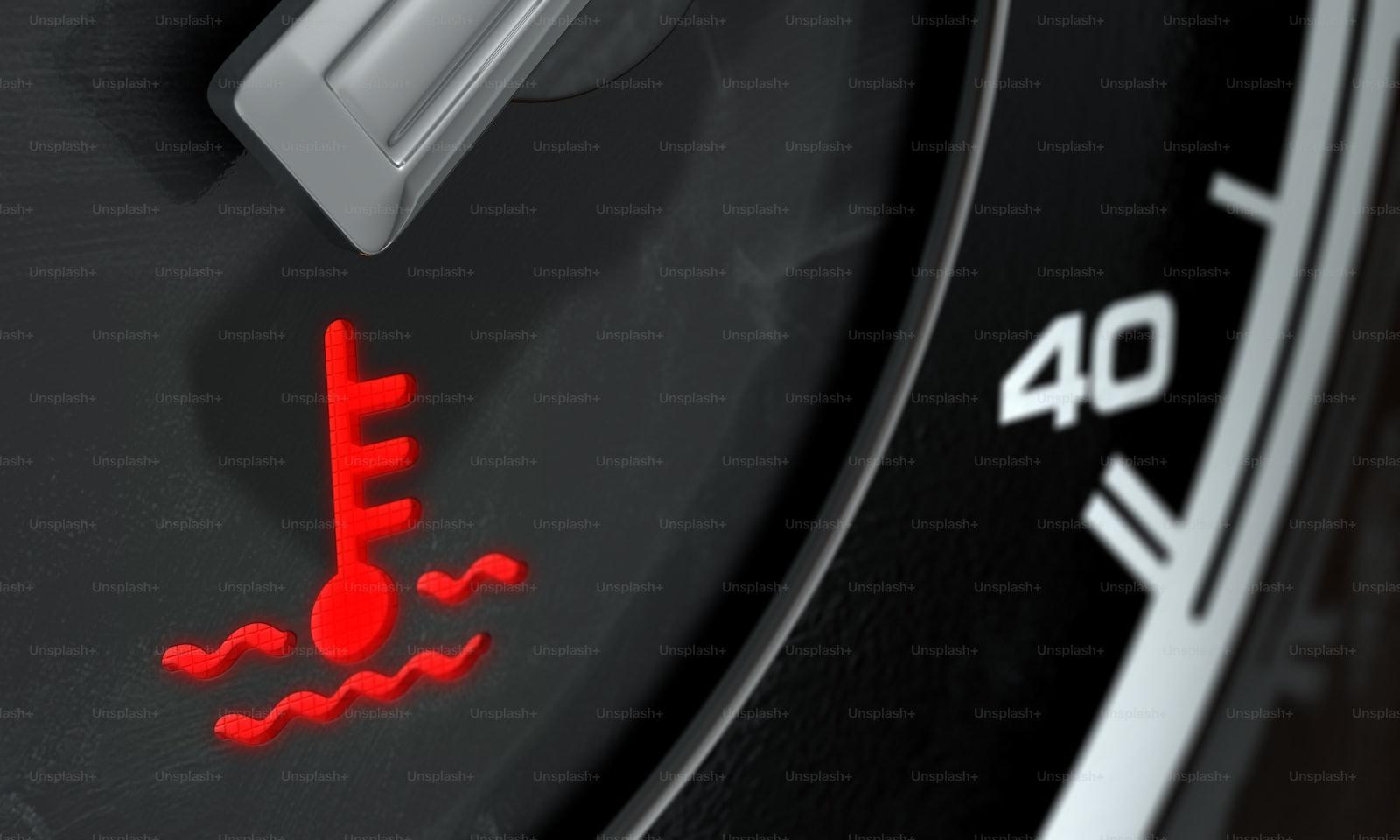
    Turn the AC off and the cabin heater to maximum — the heater matrix is a second radiator and it buys you real time. Pull over, switch off, and do not open the cap on a hot system. Then call.

Sayara Auto Services vs. Others

Anyone can carry a battery in a van. Here is what actually changes when you call us instead of the nearest garage or the roadside guy with a booster pack.

What mattersSayara Auto ServicesOthers
Response time25 min average, 24/7, every dayHours of waiting, or a next-day appointment
Where you're servedAt your location — home, office or roadsideYou tow or push the car to their garage
PricingQuoted before we set off, VAT includedQuoted only after the old battery is out
Battery stockSealed, genuine, manufacture date checkedRefurbished or long-shelved old stock
DiagnosisBattery, alternator and starter tested before we sell you anythingA battery sold on the symptom alone
WarrantyUp to 24 months, in writing at the time of fittingA verbal promise and a paper slip
Old batteryCollected and recycled free of chargeLeft with you, or its scrap value pocketed
PaymentCard, cash, Tabby and Tamara instalmentsCash only, no invoice

Diagnostics & prevention

What a diagnostic test can and cannot tell you

A code is a symptom with a number on it. Here is how to read one, and the five checks worth doing before a long drive.

What a proper scan reads

  1. 01

    Read every module, not just the engine

    A cheap code reader talks to the engine ECU only. Faults in ABS, airbag, transmission and body modules never appear, and those are exactly where an intermittent electrical fault hides.

  2. 02

    Pending codes matter more than stored ones

    A pending code is a fault the car has seen once but not yet confirmed. It is the earliest warning available, and it is invisible to anyone who only clears the light.

  3. 03

    Freeze-frame data is the actual evidence

    When a code sets, the ECU snapshots engine speed, load, coolant temperature and fuel trims at that instant. That snapshot tells you whether the fault happens cold, hot, at idle or under load — which is the difference between finding it and guessing.

  4. 04

    Live data separates the sensor from the fault

    A code naming a sensor usually means the sensor reported something out of range — not that the sensor is broken. Watching it live while the engine runs is how you tell a failed sensor from a sensor honestly reporting a real problem.

Five checks before a long drive

  • 01

    Tyre pressures cold, all four plus the spare — heat and load are exactly what a long drive adds

  • 02

    Coolant and oil at the marks, checked on level ground with a cold engine

  • 03

    Battery age and terminals — a battery over three years old is the most likely thing to strand you

  • 04

    Brake pad thickness and a firm pedal, not just the absence of noise

  • 05

    Wipers, washer fluid and every exterior light — cheap, and the first things to matter in a dust storm

Average arrival across Dubai is 25-40 minutes, 24 hours a day including weekends and public holidays.

More services

The rest of what the workshop does

Batteries are what most people call us for first. This is everything else, from a brake pad change at your office to a full body respray.

See all 21 services

Rated by drivers across Dubai

Google Reviews4.822 reviews

What drivers in Dubai ask us

How long does a mobile car battery replacement take in Dubai?

About 20 minutes once we arrive, and our average arrival across Dubai is 25 to 40 minutes. We test the old battery and the charging system before fitting, so you leave knowing the battery was actually the problem.

How much does a car battery cost in Dubai?

The price depends on the group size, the capacity your car needs and whether it has a start-stop system, which decides whether it takes a premium AGM unit. We quote before we start and the price includes fitting, disposal of the old battery and VAT.

How long do car batteries last in Dubai?

Two to three years for most cars, against four to five in a cooler climate. Sustained heat evaporates electrolyte and accelerates grid corrosion, which is why a battery here often fails on the first cool morning after a hot summer rather than during it.

Do you come to me, or do I bring the car to you?

For batteries, jump starts, tyres, oil changes and brakes we come to you — roadside, home parking or your office. Body work, gearbox work and anything needing a lift happens at the workshop, and we can recover the car there.

Is a jump start enough, or do I need a new battery?

If the car jump starts and then goes flat again overnight, the battery is no longer holding charge or something is draining it. If it starts and then dies while driving, the alternator is not charging. We test both on the spot rather than selling you a battery you may not need.

Are you open at night and on weekends?

Yes, 24 hours a day including Fridays and public holidays. Nights are quieter, so the response is usually faster than during the day.

What warranty do you give?

Batteries carry up to 24 months depending on the brand and tier, and workmanship on every repair is covered for 6 months. The warranty terms are given to you in writing at the time of the job, not on request.

Which car brands do you work on?

All of them. Japanese, Korean, German, American, Chinese and British makes are all routine for us, and every brand has its own page on this site with the batteries and services that fit it.

Car won't start? A van can be with you in about 25 minutes.

Call, or send your location on WhatsApp. No forms, no hold music, any hour.